Author: Priyanshu Sharma

  • How to Integrate AI Strategy With Your Corporate Culture

    How to Integrate AI Strategy With Your Corporate Culture

    For many C-suite executives, Artificial Intelligence (AI) is often viewed as a technical upgrade: a more powerful version of the software tools we have used for decades. However, at Exceed, we have observed that the most successful digital transformations are not led by IT departments, but by a fundamental shift in organizational DNA.

    When AI strategy is treated as a "plug-and-play" solution, it inevitably clashes with the existing corporate culture. Employees fear displacement, middle management clings to traditional decision-making rituals, and the investment fails to yield the predicted ROI. Integrating AI strategy with your corporate culture is about moving from a "technology first" mindset to a "human-centric innovation" model.

    1. Aligning AI Strategy with Corporate Purpose

    AI should never exist in a vacuum. If your AI initiatives are not directly tethered to your company’s core mission, they will be viewed as a distraction.

    • Audit Your Objectives: Before deploying a single algorithm, identify where AI can accelerate your existing business goals. Are you trying to improve customer intimacy, or are you focused on operational excellence?
    • Contextualize the Technology: Frame AI around your purpose. For a family business in the GCC focused on legacy and trust, AI should be presented as a tool to ensure long-term sustainability and better service for the next generation.
    • Unified Vision: Ensure the board and the frontline staff share a single narrative. AI is an enabler of your strategy, not a replacement for your values.

    Explore how to align your business goals with modern frameworks through our Strategy Capabilities.

    2. Defining Values-Aligned Implementation

    Ethics and values are the guardrails of culture. As you integrate AI, your corporate values must be translated into technical guidelines.

    Define AI-Specific Values
    • Transparency: How clear are we with employees about how AI models make decisions?
    • Accountability: Who is responsible when an AI-driven recommendation fails?
    • Equity: Are we ensuring that our data sets are free from biases that contradict our diversity goals?
    Executive Action Items:
    1. Map corporate values to AI objectives: If "Integrity" is a core value, your AI strategy must prioritize data privacy and algorithmic fairness.
    2. Continuous Feedback Loops: Create channels where employees can flag ethical concerns without fear of retribution.

    C-suite executives discussing AI strategy and corporate values in a modern boardroom.

    3. Shifting Leadership Behaviors and Beliefs

    The integration of AI requires a shift from a "know-it-all" leadership style to a "learn-it-all" approach. Leaders must model the curiosity and adaptability they expect from their teams.

    As our expert John Sanei often highlights, the future belongs to those who can unlearn and relearn. In an AI-driven environment, the leader’s role is no longer to have all the answers but to ask the right questions.

    • Address Belief Barriers: Many leaders view AI as "someone else's responsibility." You must challenge the internal skepticism that suggests AI is just a trend.
    • Visible Engagement: Senior leaders should share their own experiments with AI: including the failures. When a CEO admits they are learning how to use a large language model to draft reports, it grants the rest of the organization permission to experiment.
    • Modern Leadership: High-impact Executive Coaching can help leaders navigate the psychological shift required to lead in an automated world.

    4. Investing in Change Management

    Research indicates that organizations that prioritize change management are 1.6x more likely to report that their AI initiatives exceeded expectations. Cultural resistance is the primary reason AI projects stall.

    The Three Levels of Adaptation:
    1. Individual Level: Focus on upskilling. Give employees the tools and the time to achieve AI literacy.
    2. Team Level: Redesign workflows. Don’t just add AI to an old process; create new processes that take advantage of human-AI collaboration.
    3. Organizational Level: Develop governance models that balance speed with safety.

    For more on navigating these shifts, see our insights on Technology Integration.

    5. Building a Collaborative, Data-Driven Culture

    A culture that integrates AI is one that values evidence over intuition. This requires breaking down the silos that traditionally separate departments.

    • Data Fluency: Encourage employees at all levels to understand the data that fuels AI. This doesn't mean everyone needs to be a data scientist, but everyone should be "data-literate."
    • Cross-Functional Teams: Build squads that include data scientists, domain experts, and HR professionals to ensure AI solutions are holistic.
    • Diagnostic Tools: Use AI as a diagnostic tool to surface existing cultural obstacles, such as misalignments between workforce capabilities and organizational strategy.

    Diverse professional team collaborating on data-driven innovation and digital transformation.

    6. AI in the Context of Family Business Governance

    In the GCC, where family businesses are the backbone of the economy, integrating AI requires a unique touch. Governance and succession planning are critical components of the culture here.

    Integrating AI into a family business isn't just about efficiency; it's about Succession Planning. The next generation of leaders expects a digital-first workplace. By embedding AI into the governance structure now, current leaders can ensure a smoother transition to a tech-savvy generation.

    • Preserving Legacy: Use AI to document and codify the "founder’s wisdom," making it accessible to future leaders.
    • Modern Governance: Implement AI-driven analytics to provide objective data for board meetings, reducing the emotional friction often found in family business decision-making.

    Learn more about our specialized approach to Family Business Governance.

    7. The Role of Executive Education

    Integration is an educational journey. At Exceed, we provide the bridge between technical capability and strategic leadership.

    Our Approach to AI Literacy:
    • Workshops for the C-Suite: Focused on the strategic "Why" rather than just the technical "How."
    • Expert Access: Engage with world-class thinkers like Anton Musgrave or Neal Cross to understand the global landscape of innovation.
    • Tailored Programs: We build programs that respect your unique corporate culture while pushing the boundaries of what is possible.

    Discover our full range of Capabilities to see how we can support your transformation.

    8. Overcoming the "Fear Factor"

    The most significant cultural hurdle is fear: fear of job loss, fear of irrelevance, and fear of the unknown. To integrate AI successfully, leaders must replace fear with a sense of agency.

    • Augmentation, Not Replacement: Consistently communicate that AI is here to automate tasks, not jobs. It frees up humans to do more creative, high-value work.
    • Psychological Safety: Foster an environment where employees feel safe to voice concerns about AI. If people feel threatened, they will find ways to sabotage the technology.
    • Transparency in Deployment: Be open about where AI is being tested and what the intended outcomes are.

    Confident executive using AI tools to drive human-centric digital transformation in the office.

    Summary of Executive Actions

    To ensure your AI strategy and corporate culture move in lockstep, consider the following checklist:

    Category Action
    Strategy Link every AI project to a core business KPI.
    Leadership Model AI usage and curiosity at the board level.
    Learning Invest in a "Learn-it-all" culture through Executive Coaching.
    Communication Be transparent about the "Why" and "How" of AI adoption.
    Governance Update family business structures to include AI oversight.

    Ready to Lead the Transformation?

    The window of opportunity to define your AI culture is narrowing. Organizations that wait for the "perfect" technology will find themselves trailing behind those that focused on the "perfect" cultural integration.

    At Exceed, we specialize in helping leaders navigate this complex intersection of technology, strategy, and people. Whether you are looking for high-level strategic guidance or deep-dive executive education, our team of experts is ready to assist.

    Challenge your leadership team: Are you building a technical silo, or a future-ready culture?

    SUBMIT A REQUEST FOR A STRATEGY SESSION


    Explore More from Exceed:

    • Exceed Great Minds: Our flagship program for transformative leadership.
    • Our Experts: Meet the minds shaping the future of global business.
    • About Exceed: Learn about our mission to empower the next generation of executives.
  • Why AI Strategy Will Change the Way You Think About Executive Coaching

    Why AI Strategy Will Change the Way You Think About Executive Coaching

    For decades, Executive Coaching was viewed as a high-touch, exclusive luxury reserved for the top 1% of the corporate hierarchy. It was a relationship-based endeavor, built on scheduled coffee meetings, quarterly retreats, and the subjective wisdom of experienced mentors.

    That model is currently undergoing a radical transformation.

    As organizations integrate AI Strategy into their core operations, the way we develop leaders is shifting from a reactive, periodic activity to a proactive, data-driven system. For C-suite executives and business owners in the GCC, understanding this convergence is no longer optional: it is the baseline for staying competitive in a digital-first economy.

    Why AI Strategy is the New Frontier for Executive Development

    When we talk about AI Strategy at Exceed, we aren't just talking about chatbots or automated workflows. We are talking about the fundamental redesign of how leadership functions. AI provides the "mirror" that traditional coaching often struggled to hold up consistently.

    The traditional coaching model faced three main challenges:

    1. Scalability: It was too expensive to provide a high-level coach for every rising leader.
    2. Consistency: The quality of coaching varied wildly between individual practitioners.
    3. Data Blindness: Most coaching was based on the leader’s self-reporting, which is notoriously biased.

    AI Strategy solves these by creating a framework where technology handles the data, and humans handle the judgment.

    Executive reviewing AI strategy data on a tablet for informed leadership decisions.

    Breaking the "Luxury" Barrier: Democratizing High-Performance

    One of the most significant impacts of AI on Leadership is the democratization of development. In the past, a mid-level manager with high potential might have to wait years before the company invested in a professional coach.

    By implementing an AI-driven coaching strategy, organizations can now offer:

    • On-Demand Support: Leaders don't have to wait until next Tuesday’s session to handle a conflict. AI-powered "whisperers" can provide immediate advice on communication styles before a high-stakes meeting.
    • Micro-Learnings: Instead of a three-day seminar, leaders receive daily, bite-sized nudges based on their specific performance data.
    • Scalable Succession: For family businesses in the GCC, this is a game-changer. Ensuring the "next gen" is ready for leadership requires a volume of coaching that human mentors alone cannot always provide.
    Action Item: Create your own leadership development roadmap
    • Assessment: Identify your top three leadership blind spots.
    • Courses: Align these with AI-driven modules.
    • Implementation: Set a 30-day "sprint" to apply one new behavioral change.

    From Intuition to Data: The Metrics of Modern Leadership

    The phrase "I think the coaching is working" is being replaced by "The data shows a 15% improvement in team sentiment." AI allows us to ground executive development in hard evidence.

    Through the use of Technology, we can now analyze:

    • Communication Patterns: Are you dominating meetings? Is your tone in emails fostering collaboration or creating silos?
    • Decision-Making Speed: How long does it take for a leader to move from data gathering to action?
    • 360-Degree Sentiment: AI can synthesize feedback from dozens of stakeholders to find patterns that a human coach might miss.

    This level of insight is what John Sanei and Neal Cross often highlight when discussing the future of business: the ability to turn human behavior into actionable data.

    Collaborative professionals utilizing digital tools for modern leadership development.

    The "Safe Sandbox": Risk-Free Leadership Simulations

    One of the most exciting aspects of modern coaching is the use of virtual simulators. Much like a pilot uses a flight simulator, executives can now use AI to practice high-stakes scenarios in a "safe sandbox."

    At Exceed, we believe that Communication is a muscle that must be trained. AI simulations allow leaders to:

    • Rehearse Negotiations: Practice with an AI that mimics a difficult vendor or a skeptical board member.
    • Crisis Management: Navigate a simulated PR disaster or a cyber-attack in real-time.
    • Cultural Intelligence: For leaders in the GCC, simulations can help navigate the nuances of global business partnerships while maintaining local values.

    These simulations provide immediate corrective feedback, allowing for a "fail fast, learn faster" approach that traditional coaching cannot match.

    GCC Context: AI in Family Business Succession

    In the Middle East, particularly within the GCC, Family Business governance is a priority. Succession planning is often fraught with emotional and strategic complexities.

    AI Strategy changes the way we think about Family Business coaching by providing an objective framework for growth. It helps in:

    • Objective Evaluation: Removing the bias in evaluating family vs. non-family talent.
    • Governance Alignment: Using AI to track compliance with family constitutions and governance protocols.
    • Knowledge Transfer: Capturing the wisdom of the founding generation and using AI to curate it for the next generation of leaders.

    Expert Martin Roll emphasizes the importance of brand and legacy; AI ensures that these elements are systematically taught to every successor, not just left to chance.

    Close-up of a leader interacting with data-driven insights for executive coaching.

    The Human-AI Partnership: Why Coaches Aren't Going Away

    It is a common misconception that AI will replace the executive coach. In reality, it amplifies them. The most effective leadership development today is a hybrid model.

    • The AI's Role: Data collection, pattern recognition, 24/7 availability, and simulation.
    • The Human Coach's Role: Empathy, ethical judgment, nuanced interpretation, and the "gut feel" that comes from decades of experience.

    When you work with experts like Andrew Bryant or Ali Al-Jaberi, you are getting the benefit of human wisdom directed by AI-informed insights. This partnership ensures that the coaching is not just a pleasant conversation, but a strategic intervention.

    Comparative Analysis: Traditional vs. AI-Enhanced Coaching
    Feature Traditional Coaching AI-Enhanced Coaching
    Availability Scheduled (Monthly/Weekly) On-Demand (24/7)
    Data Source Self-Reporting Real-time Behavioral Data
    Feedback Loop Delayed Instant
    Personalization High (Human-centric) Hyper-Personalized (Data-centric)
    Cost Premium (C-Suite only) Scalable (All levels)

    How to Implement an AI-Integrated Coaching Strategy

    If you are ready to modernize your organization's approach to development, the transition should be methodical.

    1. Define Your AI Strategy first: Don't buy tools without a goal. What leadership gaps are you trying to close?
    2. Audit Your Data: Ensure you have the privacy protocols and data structures in place to feed an AI coaching platform.
    3. Select the Right Partners: Look for educational providers who understand both the technology and the human element of Executive Education.
    4. Run a Pilot: Start with a high-potential group (e.g., the next generation of a family business) and measure the ROI before scaling.

    Two generations of GCC leaders discussing family business succession and technology.

    Conclusion: The Future belongs to the Augmented Leader

    The integration of AI into executive coaching is not about turning leaders into robots. It is about removing the administrative and subjective barriers that have held back human potential for years.

    By embracing an AI strategy, you are choosing to lead with more clarity, more data, and more empathy. You are moving from a world of "best guesses" to a world of "informed excellence."

    Are you ready to change the way you think about growth?

    SUBMIT your interest in our upcoming Exceed Great Minds sessions to learn more about how we are integrating these technologies into our leadership programs.

    Next Steps for Your Leadership Team:

    • Review your current coaching spend and reach.
    • Assess the "digital readiness" of your top-tier executives.
    • Contact our team for a consultation on modernizing your leadership development framework.

    For more insights on the future of work and executive strategy, visit our capabilities page.

  • 7 Mistakes You’re Making with AI Strategy (and How to Fix Them)

    7 Mistakes You’re Making with AI Strategy (and How to Fix Them)

    The promise of Artificial Intelligence has shifted from a futuristic concept to a fundamental pillar of corporate survival. As we move deeper into 2026, the gap between companies that "use AI" and those that have a coherent AI Strategy is widening.

    For the C-suite and business owners, the pressure to implement AI is immense. However, haste often leads to systemic errors that drain resources without delivering value. At Exceed, we have observed that most failures aren't technological: they are strategic.

    Here are the seven most common mistakes leaders make with AI implementation and the concrete steps required to fix them.


    1. Treating AI as a "Plug and Play" Software Solution

    Many leaders approach AI as they would a standard software update or a new CRM module. They believe they can buy a solution, "plug it in," and watch productivity soar. This is a fundamental misunderstanding of Digital Transformation. AI is not a static tool; it is a dynamic system that requires continuous integration into business processes.

    The Pitfall: "Shiny Object Syndrome"

    Purchasing technology before defining the problem leads to expensive tools that nobody knows how to use. This creates a fragmented tech stack and frustrated teams.

    The Fix: Create a Roadmap First
    • Assessment: Conduct a thorough audit of current workflows to identify high-friction areas.
    • Strategy First: Develop a 12-month AI Strategy that aligns with your specific business goals.
    • Integration: View AI as a core business transformation project, not an IT-only initiative.

    2. Ignoring Data Quality: The "Garbage In, Garbage Out" Trap

    An AI model is only as intelligent as the data it consumes. Many organizations attempt to layer advanced AI over legacy systems filled with fragmented, inconsistent, or outdated information. This leads to "hallucinations": where the AI provides confident but entirely false insights.

    The Pitfall: Data Silos

    In many GCC family businesses, data is often trapped in departmental silos or stored in manual formats. This lack of a "single source of truth" makes AI implementation nearly impossible.

    The Fix: Data Governance and Auditing
    • Cleanse: Standardize data formats and eliminate duplicates before feeding them into an AI system.
    • Centralize: Move toward a unified data architecture.
    • Investment: Allocate at least 50% of your AI budget to data preparation and infrastructure via our Technology Capabilities.

    Executive professional analyzing structured data nodes for a clean AI strategy framework.


    3. Lack of Clear Strategic Alignment and ROI Metrics

    A significant number of AI initiatives fail because they lack a "Strategic North Star." Organizations often launch AI projects because "everyone else is doing it," without a clear understanding of what success looks like. Without measurable KPIs, it is impossible to justify the investment to stakeholders or the board.

    The Pitfall: Aimless Experimentation

    Experimentation is necessary, but unstructured experimentation without a path to production is a waste of capital.

    The Fix: Define Success Metrics Early
    • Objective Setting: Choose three specific business outcomes (e.g., reducing customer response time by 40% or increasing supply chain efficiency by 15%).
    • ROI Tracking: Establish a monthly review process to track the financial impact of AI tools.
    • Accountability: Assign a dedicated lead to oversee the project's alignment with the overall corporate vision.

    4. Trying to "Boil the Ocean" (Over-Complexity)

    Leaders often feel they must launch massive, enterprise-wide AI systems to stay competitive. However, the complexity of these projects often leads to "analysis paralysis" or total project collapse. Rushing into complex use cases without building a foundation of small wins is a recipe for disaster.

    The Pitfall: Scalability Failures

    Approximately 42% of AI projects fail when they attempt to scale too quickly without validating the initial logic.

    The Fix: Prioritize Quick Wins
    • Use Case Selection: Focus on "low-hanging fruit": processes that are repetitive and high-volume.
    • Pilot Programs: Run 90-day pilots to test assumptions before full-scale deployment.
    • Feedback Loops: Use the insights from small successes to build momentum and internal buy-in.

    5. Neglecting Governance in Family Businesses and GCC Firms

    In the context of the GCC, particularly within large family-owned conglomerates, governance is a critical but often overlooked aspect of AI strategy. Transitioning from traditional leadership to tech-driven governance requires a delicate balance of legacy and innovation.

    The Pitfall: Succession and Governance Gaps

    Implementing AI without updating governance structures can lead to friction between the founding generation and the "New Gen" leaders. Without clear ownership, AI projects often stall in the committee stage.

    The Fix: Structured Governance Frameworks
    • Governance Audit: Review how decisions are made and ensure AI risks are managed at the board level.
    • Family Alignment: Use specialized Family Business Governance consulting to bridge the gap between tradition and technology.
    • Policy Development: Create clear guidelines on data privacy, ethics, and AI usage within the organization.

    GCC family business leaders collaborating on digital transformation and governance strategy.


    6. The "Executive Coaching" Gap: Forgetting the Human Element

    Perhaps the most dangerous mistake is assuming that your leadership team is ready to lead an AI-driven organization. AI strategy is not just about code; it is about culture and mindset. If your leaders are not literate in AI capabilities and limitations, they cannot lead the transformation effectively.

    The Pitfall: Cultural Resistance

    Employees often fear AI as a threat to job security. If leaders cannot communicate the vision of "AI as an augmenter" rather than a "replacer," the culture will reject the technology.

    The Fix: Invest in Modern Leadership
    • Executive Coaching: Engage in high-level Executive Coaching to help C-suite leaders develop the digital mindset required for 2026.
    • Upskilling: Create internal "AI Literacy" programs for all levels of management.
    • Change Management: Focus on the human side of digital transformation, ensuring that the team understands their evolving roles.

    7. Rushing to Production Without Proper Validation

    In the race to be first, many companies bypass the rigorous testing phase required for AI systems. Unlike traditional software, AI systems are non-deterministic: they can behave differently over time as they process more data.

    The Pitfall: Risk Exposure

    Deploying an unvalidated AI model can result in legal liabilities, brand damage, and operational errors that are difficult to reverse.

    The Fix: Implement a Validation Protocol
    • Human-in-the-Loop: Ensure that critical AI-driven decisions are reviewed by human experts before being finalized.
    • Stress Testing: Test models against "edge cases" to see where they break.
    • Monitoring: Deploy monitoring tools that alert your team when the AI's output begins to deviate from expected parameters.

    Diverse executives performing human-in-the-loop validation for AI strategy implementation.


    Summary Assessment: How Robust is Your AI Strategy?

    To help you identify where your organization stands, consider the following checklist. If you cannot confidently select the "Optimized" option for these categories, your strategy may need a reset.

    Category Current State Goal State
    Data Quality Fragmented / Siloed Single Source of Truth
    Leadership Skeptical / Untrained Coached & AI-Literate
    Governance Informal / Legacy Structured & Modern
    Use Cases Complex / Theoretical Practical / ROI-Focused
    Validation Minimal / Rushed Continuous Human Oversight

    Moving Forward: Challenge Your Strategy

    Developing an AI Strategy is not a one-time event; it is an ongoing evolution of your business model. The most successful organizations are those that treat AI as a leadership challenge, not a technical one.

    Are you ready to refine your approach and avoid these common pitfalls? At Exceed, we provide the expertise needed to navigate the complexities of AI, Leadership, and Family Business governance.

    Take Action Today:

    1. Challenge your colleague: Share this post with your CTO or COO and ask: "Which of these 7 mistakes are we currently making?"
    2. Assessment: Book a consultation with our experts to audit your current digital roadmap.
    3. Growth: Explore our Executive Education programs to prepare your leadership for the AI era.

    SUBMIT your inquiry for a tailored AI Readiness Workshop: Contact Us

  • Why a Robust AI Strategy Will Change the Way You Lead Your Team

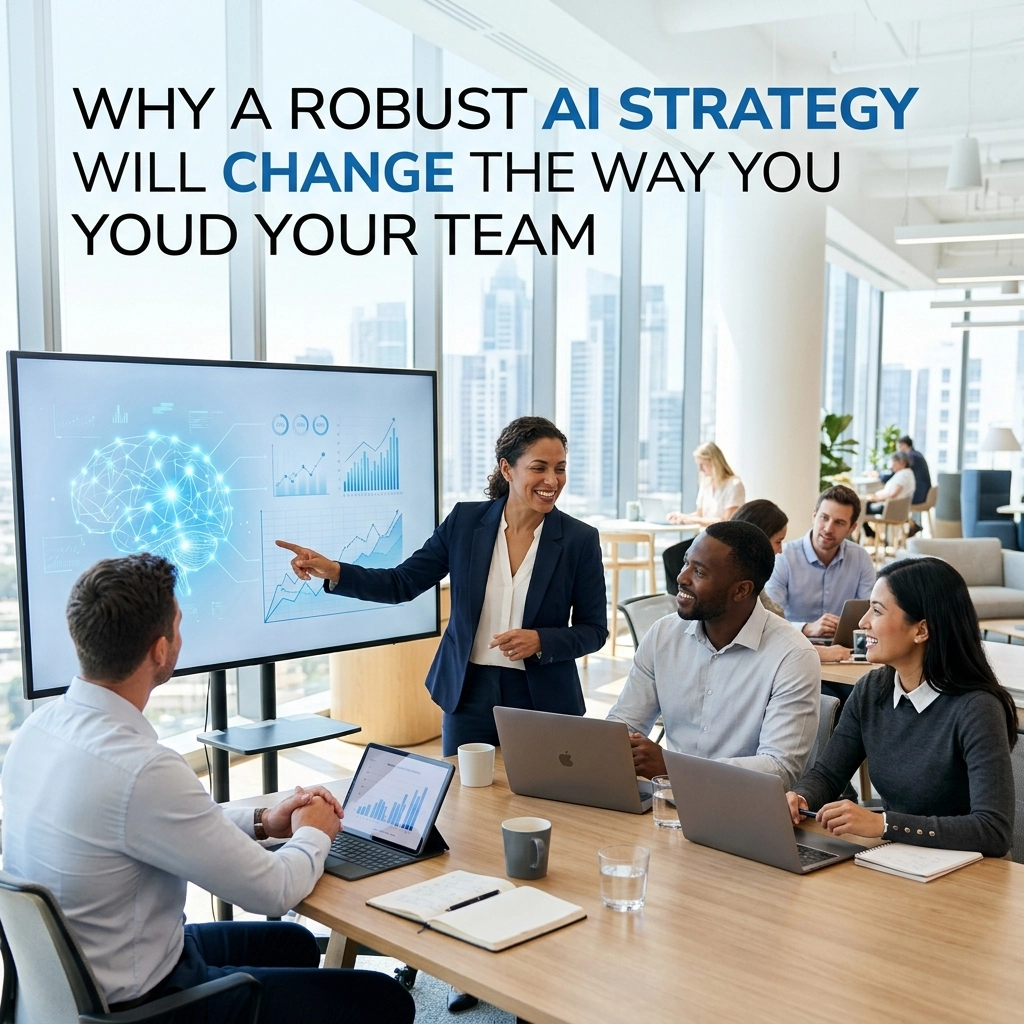
    Why a Robust AI Strategy Will Change the Way You Lead Your Team

    For decades, leadership was defined by information asymmetry. Leaders held the data, the experience, and the ultimate authority to make decisions based on that exclusive access. Today, the landscape has fundamentally shifted. Artificial Intelligence (AI) has democratized information, accelerated the pace of decision-making, and redefined what "productivity" looks like.

    For C-suite executives and business owners, particularly within the competitive markets of the GCC, AI is no longer a "future tech" concern handled by the IT department. It is a core strategic pillar. A Robust AI Strategy does more than automate tasks; it fundamentally alters the relationship between a leader and their team.

    The Shift from Manager to Orchestrator

    The implementation of AI requires a transition in leadership style. Traditional management focused on oversight and task allocation. Modern leadership, powered by AI, focuses on orchestration.

    • Data-Driven Empathy: Leaders can now use AI to understand employee sentiment and engagement levels in real-time, allowing for more proactive and empathetic intervention.
    • Decentralized Decision-Making: When AI provides the same insights to a junior manager as it does to a Director, the role of the leader shifts from "The Decider" to "The Context Provider."
    • Strategic Capacity: By offloading cognitive load to AI systems, leaders reclaim 30-40% of their time to focus on high-value activities like Digital Transformation and long-term vision.

    Executive leader focusing on digital transformation and AI strategy in a modern corporate boardroom.

    Defining the Pillars of a Robust AI Strategy

    A strategy is only as "robust" as its weakest link. For an AI roadmap to truly change how you lead, it must be built on three specific foundations:

    1. Governance and Ethics

    In the context of the GCC, particularly in Family Business structures, governance is paramount. A robust strategy defines who owns the data, how bias is mitigated, and where the "human-in-the-loop" remains non-negotiable. This ensures that as you lead, you are protecting the legacy and reputation of the firm.

    2. Talent Augmentation, Not Replacement

    Leadership in the AI era is about convincing your team that AI is an "Exoskeleton for the Mind." Your strategy must outline how roles will evolve. Instead of fearing replacement, teams should see AI as a tool that allows them to do more meaningful work.

    3. Infrastructure and Scalability

    Leading a team through technological change requires a reliable foundation. Whether you are looking at Strategy Capabilities or technical integration, your team needs to know the tools will work at scale.

    The Critical Role of Executive Coaching in the AI Era

    As technology becomes more complex, the "human" skills of leadership become more valuable. This is why Executive Coaching has seen a massive surge in demand among top-tier leaders.

    Why is coaching essential for an AI strategy?

    • Unlearning Old Patterns: Many leaders struggle to let go of the control-based models of the past. Coaching helps bridge the gap between "how we've always done it" and "how we must do it now."
    • Managing Change Fatigue: Your team is likely overwhelmed by the pace of technological change. A coach helps you develop the emotional intelligence (EQ) to navigate this transition without burning out your talent.
    • Strategic Clarity: Experts like John Sanei emphasize the need for a "Future-Ready" mindset. Coaching provides a safe space to test new leadership theories before implementing them across the organization.

    Explore how Leadership Capabilities are being redefined at Exceed.

    AI Strategy in Family Businesses: Governance and Succession

    In the Middle East, the intersection of Family Business and AI is particularly interesting. Succession planning is no longer just about who takes the chair; it’s about what kind of digital ecosystem they inherit.

    • Knowledge Transfer: AI can be used to codify the decades of "implicit knowledge" held by founders, making it accessible to the next generation of leaders.
    • Modernizing Governance: Implementing AI-driven reporting can provide the transparency required for modern family councils and boards.
    • Attracting Top Talent: The next generation of professionals: both family members and external hires: expect to work in a digitally mature environment.

    For more on managing these transitions, visit our Family Business Capabilities page.

    Family business leaders planning digital succession and AI integration for future growth.

    Leading the "Centaur Team"

    A "Centaur" in AI terms refers to a human-AI hybrid: a team that leverages the best of human intuition and AI speed. Leading these teams requires a new set of KPIs:

    1. AI-Augmented Output: Measuring how much more the team achieved with AI versus without it.
    2. Creative Velocity: How quickly can the team move from an idea to a prototype?
    3. Human-Centric Value: Time spent on tasks that only humans can do (e.g., complex negotiation, relationship building, mentorship).
    Challenge Your Current Approach

    Is your leadership style still optimized for a pre-AI world?

    • Current State: Manual reporting, top-down directives, slow feedback loops.
    • Future State: Real-time dashboards, collaborative AI agents, continuous feedback culture.

    Implementing the Strategy: An Action Plan for Leaders

    To move from theory to practice, leaders must follow a structured approach. At Exceed, we believe that education is the catalyst for this transformation.

    Step 1: The Readiness Audit
    Assess your current organizational culture. Is there a "fixed" mindset or a "growth" mindset regarding technology? Use our Strategy Assessment to identify gaps.

    Step 2: Skill Mapping
    Identify which members of your team are "Early Adopters" and can act as AI Champions.

    Step 3: Pilot and Pivot
    Don't overhaul the entire company overnight. Start with one department: perhaps Marketing or Finance: and iterate based on the results.

    Diverse leadership team executing an AI strategy pilot program in a modern office innovation hub.

    Interactive Assessment: Is Your Leadership Style Ready for AI?

    Select the option that most closely describes your current situation:

    1. How do you currently view AI tools in your workflow?

    • A cost-saving measure to reduce headcount.
    • An experimental tool for specific tasks.
    • A fundamental partner in strategic decision-making.

    2. How often do you discuss AI ethics with your board/team?

    • Never.
    • Only when a problem arises.
    • Monthly as part of our governance framework.

    3. What is your primary goal for Digital Transformation?

    • Keeping up with competitors.
    • Improving internal efficiency.
    • Redefining the value we provide to customers.

    Ready to take the next step? SUBMIT your interest for a personalized consultation on Technology and AI Strategy.

    Conclusion: The Human Advantage

    A robust AI strategy doesn't make a leader obsolete; it makes them indispensable. By automating the mundane and optimizing the complex, AI allows you to return to the essence of leadership: Vision, Culture, and People.

    As we look toward the future of the GCC’s economic landscape, the leaders who thrive will be those who embrace the "Double-Bottom Line": using AI to drive both profitability and human potential.

    Whether you are navigating Succession Planning or looking for Executive Coaching to sharpen your edge, the time to build your AI strategy is now.

    Create Your Own Path to Leadership Excellence

    Exceed provides the world-class expertise needed to navigate these shifts. From experts like Martin Roll on global branding to Nabil El-Hage on financial strategy, we offer the insights that C-suite executives need to lead in a changing world.

    Take Action Today:

    • Enroll in our upcoming leadership modules.
    • Connect with an expert for a bespoke corporate workshop.
    • Transform your family business governance for the digital age.

    Contact Exceed Today to begin your journey toward augmented leadership.

  • How to Integrate AI Strategy With Your Leadership Development Program

    How to Integrate AI Strategy With Your Leadership Development Program

    In the current business landscape, AI is no longer a peripheral technical concern: it is a core pillar of corporate strategy. For C-suite executives and business owners, the challenge is not just "buying" AI, but leading an organization that can effectively utilize it. This requires a fundamental shift in how we approach a Leadership Development Program (LDP).

    To stay competitive, leadership training must evolve from generic management skills to a sophisticated blend of emotional intelligence and algorithmic literacy. Integration is the only way to ensure that your digital transformation isn't just a series of expensive tools, but a culture-wide upgrade.

    The Paradigm Shift: From Digital Literacy to AI-First Leadership

    Integrating AI into your leadership development isn't about teaching every Director how to code. It is about fostering an AI-First Mindset. This means leaders must understand how data flows through the organization and where AI can create a competitive advantage.

    Traditional leadership focused on stability and incremental growth. Modern Leadership, however, requires managing "augmented teams" where humans and machines work in tandem.

    Diverse executive team discussing AI strategy and data insights in a modern boardroom.

    Core Pillars of an Integrated AI-Leadership Framework

    To successfully merge AI Strategy with your LDP, you must focus on four specific developmental pillars:

    1. Strategic Literacy and Use-Case Identification

    Leaders need the ability to distinguish between AI hype and high-impact business applications.

    • Assessment: Can your leaders identify which 20% of tasks, if automated, would yield 80% of the efficiency gains?
    • Action: Include modules that teach leaders to evaluate AI vendors and internal data readiness.
    • Outcome: A pipeline of high-ROI AI projects backed by informed executive sponsorship.

    2. Leading Through Cultural Adoption

    The biggest barrier to AI is rarely the technology; it is the human fear of obsolescence.

    • Focus: Change management and psychological safety.
    • Skills: Transparent communication, empathy, and vision-casting.
    • Goal: Transitioning the workforce from "AI-threatened" to "AI-empowered."

    3. Data-Driven Decision Making

    Leadership has historically been an "art" based on intuition. AI turns it into a "science" backed by real-time analytics.

    • Training: Workshops on interpreting AI dashboards and spotting algorithmic bias.
    • Integration: Use tools like Executive Coaching to help leaders trust data without losing their human intuition.

    4. Ethical Governance and Risk Management

    In the GCC and beyond, governance is a top priority for sustainable growth.

    • Focus: Privacy, security, and the ethical implications of automated decisions.
    • Requirement: Establishing an AI Ethics Committee within the leadership tier.

    The Role of Executive Coaching in the AI Era

    High-volume keywords like Executive Coaching are trending for a reason: as technology becomes more complex, the need for personalized, human-centric guidance grows. Integrating AI into your coaching framework allows for a "High-Tech, High-Touch" approach.

    For example, using AI-driven sentiment analysis on organizational communication can provide a coach with objective data on a leader’s impact. This data, when combined with the expertise of mentors like Andrew Bryant or John Sanei, creates a hyper-personalized development path.

    Executive coaching session featuring a mentor and leader discussing personalized development goals.

    Tailoring for Family Businesses in the GCC

    In the GCC region, Family Business structures face unique challenges when integrating AI. Succession planning and governance often involve balancing tradition with the rapid pace of Digital Transformation.

    Succession Planning and AI

    The next generation of leaders (Gen Z and Millennials) are often digital natives. However, they need a structured LDP that bridges the gap between their technical comfort and the strategic wisdom of the founding generation.

    • Governance: AI can be used to formalize family governance, tracking performance metrics and ensuring transparency in decision-making.
    • Legacy: Use AI to document and preserve the institutional knowledge of founders, creating a digital "brain trust" for future generations.

    GCC-Specific Governance

    With the UAE and Saudi Arabia leading the way in national AI strategies, regional family businesses must align their internal Future Capabilities with these national visions. This involves:

    • Investing in localized AI models.
    • Ensuring data sovereignty.
    • Participating in regional thought leadership via platforms like Exceed Great Minds.

    Balancing Technology and Human Expertise

    A common mistake is letting the technology drive the developmental agenda. At Exceed, we believe measurement must serve a human purpose.

    When designing your integrated LDP, follow this three-phase approach:

    1. The Design Phase: Define the human behaviors you want to enhance (e.g., better collaboration, faster decision-making).
    2. The Validation Phase: Use AI tools to measure these behaviors, but ensure the insights are validated by human experts like Nabil El-Hage.
    3. The Implementation Phase: Use peer discussions and human-led workshops to turn data into action.

    Intergenerational leadership collaboration in a GCC family business using AI data visualization.

    Practical Steps to Integration

    If you are ready to modernize your Leadership Development, follow this checklist:

    Step 1: Audit Your Current Program
    • How much of your current LDP focuses on "soft skills" vs. "digital strategy"?
    • Is there a disconnect between your IT department's AI goals and your HR department's training goals?
    Step 2: Identify AI Champions
    • Select a pilot group of senior leaders to undergo an "AI-First Leadership" bootcamp.
    • Encourage them to share their learnings with the broader management team.
    Step 3: Embed AI Tools into the Learning Journey
    • Use AI-powered platforms for personalized learning paths.
    • Implement simulation-based training where leaders must navigate AI-generated business crises.
    Step 4: Focus on "Human-Centric" Skills
    • As AI takes over analytical tasks, double down on training for Communication, Empathy, and Strategic Vision.
    • Explore our Communication Capabilities to see how these skills are evolving.

    Professional leadership development workshop focusing on strategic communication and team collaboration.

    Measuring the ROI of AI-Integrated Leadership

    The success of your integrated program shouldn't just be measured by "completion rates." You need to look at:

    • Operational Efficiency: Are leaders successfully implementing AI use cases that save time?
    • Employee Engagement: Has the "fear of AI" decreased within the organization?
    • Strategic Agility: How quickly can your leadership team pivot in response to new technological disruptions?

    Building the Future With Exceed

    Integrating AI strategy into your leadership development is not a one-time event; it is an ongoing process of evolution. Whether you are a multi-national corporation or a regional family business, the goal is the same: to create leaders who are as comfortable with algorithms as they are with people.

    At Exceed, we specialize in Executive Education that bridges the gap between technology and human potential. Our team of global experts is ready to help you design a program that doesn't just keep up with the future but defines it.

    Ready to transform your leadership team?

    SUBMIT YOUR INQUIRY


    Key Takeaways for Your Strategy Meeting:

    • AI is a leadership skill, not just a technical one.
    • Executive Coaching must be data-informed but human-led.
    • Family Businesses in the GCC must use AI to bridge generational gaps and secure succession.
    • Digital Transformation fails without a culture of psychological safety and AI literacy.
  • Why a Robust AI Strategy Will Change the Way You Lead Digital Transformation

    Why a Robust AI Strategy Will Change the Way You Lead Digital Transformation

    Digital transformation has been a buzzword in C-suites for over a decade. However, the emergence of generative AI and advanced machine learning has shifted the goalposts. It is no longer enough to "go digital" by migrating to the cloud or automating basic workflows. To remain competitive, leaders must now architect a Robust AI Strategy that serves as the backbone of their entire organizational evolution.

    At Exceed, we observe that the most successful leaders in the GCC and beyond are those who stop viewing AI as a technical add-on and start viewing it as a fundamental leadership shift. This isn't just about technology; it’s about a new way of thinking, deciding, and leading.

    The Paradigm Shift: From Tool Adoption to Strategic Realignment

    Historically, digital transformation focused on efficiency: doing the same things faster. A robust AI strategy, however, focuses on innovation and intelligence. It requires a paradigm shift from conventional frameworks to AI-driven approaches.

    Beyond Productivity Gains

    While many organizations use AI for simple tasks like draft generation or data entry, high-achieving companies are seeing a 3x to 4x increase in ROI by using AI for end-to-end business transformation. This involves:

    • Predictive Analytics: Moving from "What happened?" to "What will happen?"
    • Automated Decision-Making: Freeing up executive bandwidth for high-level strategy.
    • Hyper-Personalization: Using AI to tailor client experiences at scale.
    Strategic Alignment

    Leaders must bridge the gap between their IT departments and the boardroom. Our Strategy Capabilities emphasize that AI must be linked to specific business objectives. Without this alignment, AI initiatives become "pilot projects" that never scale.

    C-suite executives discussing AI strategy and digital transformation alignment in a boardroom.

    Reimagining Human-AI Collaboration

    One of the most significant changes in leadership style is the move toward Human-AI Collaboration. A robust strategy doesn't aim to replace humans; it aims to augment human capability.

    The "AI-First" Mindset

    Leading an AI-first organization means reimagining how teams work. Leaders must foster an environment where AI is seen as a "co-pilot." This requires:

    • Psychological Safety: Ensuring employees feel secure enough to experiment with AI tools without fear of replacement.
    • Workflow Redesign: Identifying which parts of a process are best handled by AI (data processing, pattern recognition) and which require human empathy and ethics.
    • Cognitive Diversity: Bringing together tech experts, creative thinkers, and ethical advisors to oversee AI implementation.
    Redefining Midlevel Leadership

    The role of the middle manager is changing. Instead of being task-masters, they are becoming translators and educators. They must take the high-level AI vision from the C-suite and turn it into actionable, daily workflows for their teams.

    Cultural and Behavioral Transformation

    Technology is the easy part; people are the challenge. Leading digital transformation through AI requires a deep commitment to behavioral change.

    Building Organizational Confidence

    A robust strategy includes a roadmap for upskilling. Leaders should offer Leadership Education that focuses on AI literacy. When a team understands the "why" and "how" of AI, resistance drops and innovation rises.

    Fostering an Experimental Culture

    In the era of AI, the cost of failure is often lower than the cost of inaction. Leaders must:

    • Create "Sandboxes" for testing new AI tools.
    • Celebrate "Smart Failures" where the organization learns a valuable lesson.
    • Reward data-driven decision-making over "gut feeling."

    Professionals analyzing data visualizations to foster human-AI collaboration and innovation.

    Governance, Ethics, and the GCC Context

    For business owners and C-suite executives in the GCC, particularly within large family-owned enterprises, governance is a top priority. A robust AI strategy must address the ethical implications of the technology.

    Ethical AI Frameworks

    Leaders are now responsible for the ethical output of their algorithms. This includes:

    • Bias Mitigation: Ensuring AI models do not perpetuate existing social or corporate biases.
    • Transparency: Being able to explain how an AI arrived at a specific conclusion.
    • Data Privacy: Adhering to regional regulations while leveraging global data trends.
    Family Business & Succession

    In the GCC, integrating AI into Family Business Governance is essential for long-term sustainability. AI can help in succession planning by providing objective performance data and identifying future leaders who possess the digital fluency required for the next generation.

    The Role of Executive Coaching in the AI Era

    How do you, as a leader, stay ahead of a technology that moves faster than you can read about it? The answer lies in Executive Coaching.

    Modern leadership requires a level of agility that many traditional executives find challenging. Engaging with experts like John Sanei or Nabil El-Hage can help leaders:

    • Develop a Future-Proof Perspective: Moving from a "fixed" mindset to a "growth" mindset.
    • Manage Ambiguity: Learning to lead when the technological landscape is shifting weekly.
    • Communicate Vision: Learning how to tell a compelling story about an AI-driven future that inspires, rather than intimidates.

    Explore our Executive Education Capabilities to see how personalized coaching can sharpen your edge.

    Executive coaching session showcasing professional development and digital leadership agility.

    Implementing Your AI Strategy: A Step-by-Step Approach

    To move from theory to reality, leaders should follow a structured developmental journey.

    1. Assessment: Evaluate your current digital maturity. Where is your data? Is it clean and accessible?
    2. Education: Enroll your top tier in programs like Exceed Great Minds to build foundational AI knowledge.
    3. Strategy Design: Map out 3-5 key areas where AI can drive the most value. Avoid the "shiny object" syndrome.
    4. Governance Setup: Establish an AI ethics committee or hire a Chief AI Officer.
    5. Pilot & Scale: Start with a high-impact, low-risk project to build momentum, then scale across the organization.
    Key Elements to Track:
    • Data Quality: Is your AI learning from the right information?
    • User Adoption: Are your employees actually using the tools you’ve provided?
    • Impact Metrics: Are you measuring more than just "efficiency"? Look for innovation and customer satisfaction metrics.

    Conclusion: Lead the Change, Don’t Just Follow

    A robust AI strategy will fundamentally change the way you lead because it forces you to focus on what makes humans truly valuable: vision, ethics, and strategic direction. By automating the routine and optimizing the complex, AI allows leaders to return to the core of their roles: shaping the future.

    Digital transformation is no longer a project with an end date; it is a continuous state of evolution. Leaders who embrace this reality today will be the ones who define the industry standards of tomorrow.


    Ready to Redefine Your Leadership Strategy?

    Exceed provides the tools, expertise, and coaching necessary to navigate the complexities of AI-driven transformation.

    • Explore Our Experts: Meet the minds behind the strategy here.
    • Consult with Us: Get a personalized roadmap for your digital evolution.

    [ CONTACT US ]
    [ SUBMIT INQUIRY ]


    Recommended Reading

  • How to Choose the Best AI Strategy for Your Digital Transformation (Compared)

    How to Choose the Best AI Strategy for Your Digital Transformation (Compared)

    In 2026, the question is no longer whether your organization should adopt Artificial Intelligence, but which specific AI strategy will yield the highest return on investment while maintaining organizational stability. For C-suite executives and business owners in the GCC and beyond, the "wait and see" approach has expired. The current landscape of Digital Transformation is driven by a move from experimental generative AI pilots to integrated, autonomous business systems.

    As a Director at Exceed, I have seen leaders grapple with the complexity of these choices. Choosing the wrong strategy doesn't just waste capital; it can misalign your entire workforce and create technical debt that takes years to resolve.

    The Mandate for AI-Driven Transformation

    Digital transformation is a holistic shift in how a business operates and delivers value. When we inject AI into this equation, we are looking at a fundamental redesign of workflows. According to recent industry benchmarks, organizations that successfully scale AI integrate it across their core operations rather than treating it as an isolated IT project.

    To choose the best path, you must first understand the primary strategic models currently dominating the market.

    Vision-Led Use Case Prioritization

    This approach starts with the high-level business goals and identifies the specific AI "use cases" that will move the needle. It is highly disciplined and prevents the "shiny object syndrome."

    Data-Centric AI Strategy

    This model focuses on the foundational layer. It assumes that AI is only as good as the data feeding it. This is the strategy of choice for organizations in highly regulated or specialized fields like healthcare or finance.

    Human-Centric/Upskilling Strategy

    This approach prioritizes the workforce. By focusing on Executive Coaching and employee development, organizations ensure that AI tools are actually adopted and utilized to their full potential.

    C-suite executives collaborating on an AI strategy for enterprise digital transformation in a modern office.


    Comparing the Top 4 AI Strategies for 2026

    Choosing a strategy requires a direct comparison of risk, speed to market, and long-term scalability. Below is a breakdown of the most effective strategies utilized by global leaders today.

    1. The Portfolio Approach (Crawl-Walk-Run)

    This is the most common strategy for mid-to-large enterprises. It involves balancing "quick wins" (like automated customer service) with "moonshots" (like AI-driven product innovation).

    • Best for: Diversified corporations and businesses new to AI.
    • Key Benefit: Mitigates risk by not putting all resources into a single high-stakes project.
    • Focus: Building internal consensus through proven ROI.

    2. The Agentic Automation Strategy

    In 2026, we are seeing a shift from simple chatbots to AI Agents. These are systems capable of executing complex, multi-step workflows autonomously: such as managing procurement or end-to-end supply chain logistics.

    • Best for: High-volume operational businesses (Logistics, Retail, Manufacturing).
    • Key Benefit: Massive cost reduction and 24/7 operational capability.
    • Focus: Replacing or augmenting labor-intensive administrative tasks.

    3. The Modular AI Architecture Strategy

    Instead of building a massive, monolithic AI system, companies adopt a modular approach. This allows them to swap out different Large Language Models (LLMs) or AI vendors as the technology evolves.

    • Best for: Technology-forward firms and organizations that want to avoid vendor lock-in.
    • Key Benefit: Extreme flexibility and future-proofing.
    • Focus: Technology integration and agile infrastructure.

    4. The Industry-Specific/Niche Strategy

    Rather than using general-purpose AI, some leaders choose to build or buy AI trained specifically on their industry’s data (e.g., legal AI, medical AI, or GCC-specific market data).

    • Best for: Professional services, legal firms, and specialized engineering.
    • Key Benefit: Higher accuracy and relevance compared to "out-of-the-box" solutions.
    • Focus: Deep domain expertise.
    Feature Portfolio Approach Agentic Automation Modular Architecture Industry-Specific
    Implementation Speed Moderate Fast (for pilots) Slow Moderate
    Initial Cost Scalable High High Very High
    Risk Level Low Moderate Low High
    Primary Goal Balanced ROI Operational Efficiency Flexibility Competitive Edge

    The GCC Perspective: Family Businesses and Governance

    In the GCC, the intersection of AI and Family Business governance is a unique challenge. Succession planning now requires the "NextGen" to be AI-literate. A digital transformation strategy in a family-owned conglomerate isn't just about software; it’s about maintaining the family legacy through technological relevance.

    We often recommend a strategy that emphasizes Strategy and Leadership over pure technology. For a family business, the AI strategy must include:

    • Governance Frameworks: Clear rules on how AI makes decisions to protect the brand's reputation.
    • Succession Integration: Ensuring that the next generation of leaders is equipped to manage an AI-augmented workforce.
    • Executive Education: High-level coaching for the current Board to demystify the technology.

    Explore how we support these transitions through our Family Business capabilities.

    Senior and younger GCC executives discussing digital transformation and family business succession planning.


    How to Evaluate the Best Fit for Your Organization

    To choose the right path, conduct a high-level Assessment across these four dimensions:

    1. Technical Maturity

    Do you have a clean data lake? If your data is siloed and unorganized, a "Data-Centric" strategy is your only viable starting point. You cannot build a skyscraper on a swamp. Review our Strategy capabilities to see how we help build these foundations.

    2. Risk Appetite

    Are you in a position to fail fast? If you are a regulated utility provider, a "Modular Architecture" or "Vision-Led" approach is safer than "Agentic Automation," which requires high trust in autonomous systems.

    3. Culture and Talent

    AI is a people problem, not a math problem. If your leadership team is resistant, your strategy must lead with Executive Coaching and Communication. Without buy-in from the C-suite, even the best AI will become "shelf-ware."

    4. Financial Horizon

    Are you looking for an ROI in 6 months or 6 years? Agentic automation often provides faster cost-savings, while Data-Centric strategies are long-term plays for market dominance.


    The Role of Leadership and Executive Coaching

    The most common reason AI strategies fail is not the technology: it is the lack of "Modern Leadership." Leaders today need to manage both humans and algorithms. This requires a shift in mindset that many C-suite executives find challenging.

    This is where Executive Coaching becomes a strategic asset. By working with experts like John Sanei or Martin Roll, leaders can develop the foresight needed to navigate the complexities of AI-driven transformation.

    Key Leadership Skills for AI Strategy:

    • Critical Thinking: Questioning AI outputs rather than following them blindly.
    • Change Management: Guiding a fearful workforce through the transition.
    • Ethical Oversight: Ensuring the AI strategy aligns with corporate values.

    Executive coaching session helping business leaders develop modern leadership skills for AI transformation.


    Implementation: The Step-by-Step Roadmap

    Once you have selected your strategic direction, the execution follows a standardized but rigorous path:

    1. Objective Setting: Define exactly what "success" looks like. Is it a 20% reduction in costs? A 10% increase in customer retention?
    2. Infrastructure Audit: Assess your current Technology stack. Can it support real-time data processing?
    3. Pilot Program: Launch a 90-day pilot. Use this time to gather data on human interaction with the AI.
    4. Upskilling: Roll out training programs for the staff impacted by the pilot.
    5. Scale: Once the pilot proves ROI, expand the modular framework across other departments.
    Challenge Your Strategy

    Take a moment to evaluate your current digital roadmap. Does it account for the shift from generative AI to agentic systems? If not, it may be time to pivot.

    Create Your Own Roadmap

    Every organization is unique. We recommend a bespoke consultation to align your family governance or corporate strategy with the latest AI advancements.


    Conclusion: Moving from Strategy to Action

    Choosing the best AI strategy for your digital transformation is a balancing act between ambition and pragmatism. Whether you opt for a vision-led prioritization or a modular architecture, the focus must remain on business value and leadership readiness.

    At Exceed, we specialize in the intersection of technology and executive excellence. We help you move past the buzzwords to create a strategy that is both sustainable and transformative.

    Are you ready to redefine your digital future?

    • Explore our Experts: Connect with Ali Al-Jaberi or Nabil El-Hage for strategic guidance.
    • Review Capabilities: See how our Leadership programs can prepare your team.
    • Take Action: Contact us today to begin your AI transformation journey.

    SUBMIT YOUR INQUIRY

  • Does AI Strategy Really Matter in 2026? Why Leaders Can’t Wait Any Longer

    Does AI Strategy Really Matter in 2026? Why Leaders Can’t Wait Any Longer

    It is mid-April 2026. The "honeymoon phase" of Artificial Intelligence: characterized by experimental prompts and shiny new tools: is officially over. We have entered the era of AI Industrialization.

    For C-suite executives and business owners in the GCC and beyond, the question has shifted from "What can AI do?" to "How do we govern, scale, and extract measurable value from what we’ve built?" If your organization is still treating AI as a series of isolated pilot projects rather than a core pillar of your corporate strategy, you aren't just behind: you are becoming obsolete.

    The Reality of AI in 2026: No Longer Optional

    In 2026, AI strategy is no longer a technical roadmap tucked away in the IT department. It is the very fabric of business operations. Research shows that over 80% of enterprises now have generative AI APIs and sophisticated models fully integrated into their production environments.

    The Inflection Point
    • Market Saturation: Access to AI technology is democratized. Your competitors have the same tools you do.
    • The Differentiator: The winners in 2026 are not those with the "best" AI, but those with the best Strategy for using it.
    • Productivity Gains: Top-tier firms are seeing 30-40% increases in operational efficiency by moving from generic AI use to bespoke technological frameworks.

    Corporate executives discussing enterprise AI strategy and digital transformation in a modern boardroom.

    Why Leaders Can’t Wait: The High Cost of Delay

    The "wait and see" approach was a viable (though risky) strategy in 2023. In 2026, it is a recipe for a slow exit from the market. Here is why the window for hesitation has closed:

    1. Regulatory Exposure and Compliance

    With the full implementation of global frameworks like the EU AI Act and regional regulations in the Middle East, "unstructured" AI usage is a legal liability. Organizations without a defined governance strategy face:

    • Hefty Fines: Non-compliance with data privacy and algorithmic transparency laws.
    • Reputational Damage: Bias in AI-driven decision-making can alienate a sophisticated 2026 consumer base.
    • Operational Friction: Retrofitting compliance into existing systems is three times more expensive than building it into the strategy from day one.
    2. The Talent and Execution Gap

    The biggest challenge in 2026 is not the tech; it is the people. There is a massive shortage of AI-fluent leadership.

    • Executive Coaching- is now the primary tool for bridging this gap. Leaders need to move from managing humans to managing Human-AI Hybrid Teams.
    • Organizations that delay their AI strategy find themselves unable to attract top talent, as high-performers now prioritize working in "AI-mature" environments.
    3. Compounding Technical Debt

    Every month spent without a unified AI strategy results in "Shadow AI": where different departments use siloed, incompatible tools. This leads to:

    • Duplicated Investments: Paying for the same capabilities across multiple platforms.
    • Stalled Pilots: Projects that never scale because they lack a foundational data architecture.

    AI Strategy in the GCC: Family Business and Succession

    In the Middle East, particularly within the GCC, the intersection of AI strategy and family business governance has become a critical focal point for 2026.

    For family-owned conglomerates, AI is not just a tool for profit; it is a tool for Legacy and Succession Planning.

    Modernizing the Family Office
    • Knowledge Transfer: Using AI to capture the institutional wisdom of the founding generation, ensuring that decades of "gut instinct" and relationship-building are codified for the next generation.
    • Governance: AI-driven analytics are providing objective data for board-level decisions, reducing the friction often found in family-run governance structures.
    • The Next Gen Factor: Successors are increasingly using AI adoption as their "entry project" to prove their capability to lead the digital transformation of the family legacy.

    Family business leaders in the GCC discussing succession planning and digital transformation using a tablet.

    The Human Element: Why Executive Coaching is the Secret Sauce

    You cannot automate leadership. In 2026, the demand for Executive Coaching has hit an all-time high precisely because AI has automated the routine.

    What remains are the "High-Stakes Human Skills":

    • Complex Problem Solving: Where AI provides the data, but the leader provides the intuition.
    • Empathy and Communication: Navigating the anxieties of a workforce that is constantly being "augmented" by AI.
    • Ethical Vision: Defining the "why" behind AI implementation.

    At Exceed, experts like Ali Al-Jaberi and Andrew Bryant are working with C-suite leaders to refine these exact skills. The strategy is only as good as the leader's ability to communicate it.

    Building Your 2026 AI Roadmap: A Practical Checklist

    If you are reassessing your position today, here is the framework for a robust AI strategy that moves beyond the hype:

    Phase 1: The AI Maturity Assessment
    • Inventory: Audit every AI tool currently being used (authorized or not).
    • ROI Analysis: Identify which 20% of AI use cases are driving 80% of the value.
    • Gap Analysis: Where is your data siloed? What talent is missing?
    Phase 2: Governance and Ethics
    • Committee Formation: Create a cross-functional AI Ethics Board.
    • Transparency Standards: Ensure every AI-driven decision in your company is "explainable."
    Phase 3: Scaling and Integration
    • Platform over Point-Solutions: Move away from individual "apps" and toward an integrated AI ecosystem.
    • Upskilling: Implement mandatory AI literacy programs for all staff, supported by specialized Exceed Great Minds sessions.

    Business leaders developing an integrated AI strategy roadmap in a collaborative digital transformation war room.

    Expert Perspectives: Leading the Transformation

    The shift in 2026 requires a multidisciplinary approach. Leaders are looking to futurists and strategists to navigate this terrain:

    • John Sanei: On the necessity of "Trans-disciplinary" thinking to survive the AI shift.
    • Neal Cross: On why innovation in 2026 is 90% culture and only 10% technology.
    • Martin Roll: On the importance of brand and leadership in a world of automated content.

    Conclusion: The Time for Strategy is Now

    In 2026, the gap between the "AI-Led" and the "AI-Lagging" is no longer a crack; it is a canyon. A strategy isn't a 50-page document sitting on a shelf: it is a living, breathing commitment to digital transformation, ethical governance, and human-centric leadership.

    Whether you are looking to revitalize your communication strategies or future-proof your family business governance, the first step is admitting that the old way of doing business is gone.

    Are you ready to lead the shift?

    Take Action Now

    The landscape of 2026 waits for no one. Contact our team to begin your leadership transformation.

    SUBMIT YOUR INQUIRY

    Option Range
    Current AI Maturity [Low / Medium / High]
    Primary Focus [Strategy / Family Business / Leadership]
    Team Size [1-50 / 51-200 / 200+]

    CONTACT US TODAY

  • How to Integrate AI Strategy With Your Corporate Culture

    How to Integrate AI Strategy With Your Corporate Culture

    For most C-suite executives and business owners, the conversation around Artificial Intelligence (AI) often starts and ends with technology. They focus on Large Language Models (LLMs), predictive analytics, and automated workflows. However, the true differentiator between a successful Digital Transformation and a failed investment is not the software: it is the culture.

    Integrating an AI Strategy with your corporate culture is about more than upskilling; it is about reshaping the mindset of the organization. For a leadership team to succeed, the technology must reinforce the company’s purpose, not distract from it. This requires a nuanced approach to Executive Coaching and a deep understanding of organizational change management.

    The Cultural Readiness Diagnostic

    Before a single line of code is implemented or a subscription is signed, leaders must diagnose their organization’s cultural readiness. A mismatch between high-tech ambitions and low-trust environments often leads to "shadow AI" or outright employee resistance.

    Assessing the Trust Gap

    Transparency is the foundation of any cultural shift. If employees fear that AI is a tool for redundancy rather than augmentation, they will hide inefficiencies and resist adoption.

    • Conduct qualitative cultural assessments to identify pockets of resistance.
    • Measure the level of psychological safety within teams.
    • Evaluate the current state of Data Fluency among department heads.
    Identifying the Innovation Appetite

    Is your organization risk-averse or experimental? In a risk-averse culture, AI Strategy should focus on governance and risk mitigation first. In an experimental culture, the focus should be on rapid prototyping and sandboxed testing environments.

    Business leaders in a modern boardroom discussing AI strategy integration and corporate culture alignment.

    Aligning AI With Organizational Purpose

    AI should never be an "add-on." To resonate with the workforce, AI initiatives must align with the core values and the long-term vision of the company. At Exceed, we believe that Strategy is only effective when it is coherent with the brand's identity.

    Defining the AI Vision

    Leaders must answer one critical question: Why are we doing this?

    • Efficiency Focus: If the culture is built on operational excellence, AI should be framed as a tool to remove "the robot from the human."
    • Innovation Focus: If the culture thrives on creativity, AI should be positioned as a co-pilot for brainstorming and design.
    • Customer Centricity: If the culture is service-oriented, AI should prioritize enhancing the human-to-human interaction through better data insights.
    Strategic Value Mapping
    • Resource Allocation: Ensure that AI investments deliver maximum value by focusing on high-impact areas first.
    • Performance Metrics: Realign KPIs to include AI-driven metrics, such as "time saved for creative work" rather than just "headcount reduction."

    The Role of Executive Coaching in AI Adoption

    For a corporate culture to change, the leadership must change first. Executive Coaching is a vital tool in this transition. Many directors and C-suite members suffer from "AI anxiety": a fear of being technologically obsolete.

    Leading by Example

    A leader who uses AI to draft memos or analyze board papers sends a powerful signal. Executive Coaching helps leaders:

    • Manage their own cognitive dissonance regarding technological change.
    • Develop the Communication skills necessary to lead through uncertainty. Learn more about our Communication Capabilities.
    • Move from a "command and control" style to a "coaching and facilitation" mindset.
    Developing the AI Narrative

    Leaders must create a credible narrative that addresses fears head-on. This narrative should emphasize how AI enhances human capabilities. According to industry research, employees who believe their leaders have a clear plan for AI are nearly five times more likely to feel comfortable using it.

    AI Integration in the GCC Family Business

    In the GCC region, the integration of AI faces unique challenges, particularly within Family Businesses. These organizations often balance decades of tradition with the need for modern innovation.

    Succession Planning and Technology

    Succession Planning is the ideal time to introduce AI. The next generation of leaders (Gen 2 or Gen 3) are often digital natives who view AI as a standard requirement rather than a luxury.

    • Governance: Use AI to formalize data-driven decision-making within the family council.
    • Legacy Preservation: Use AI to digitize and protect the history and knowledge base of the family legacy.
    • Explore our specialized Family Business Capabilities for more insights.
    Balancing Tradition with Agility

    The challenge is to introduce Digital Transformation without eroding the family values that built the business. This requires a focus on Modern Leadership that respects the past while pivoting toward the Future.

    Arab business leaders bridging tradition and digital transformation through collaborative modern leadership.

    Building Cross-Functional AI Teams

    Integration is a team sport. Siloing AI within the IT department is a recipe for failure. Instead, create cross-functional units that represent the entire organization.

    The "AI Council" Structure

    An effective AI Council should include:

    • Business Leaders: To ensure strategic alignment.
    • Data Scientists: To handle technical implementation.
    • IT Specialists: To manage infrastructure and security.
    • HR and Culture Leads: To monitor employee sentiment and manage the "human" impact.
    Fostering Data Fluency

    Cultural integration requires that everyone speaks the same language. This doesn't mean every employee needs to be a coder, but they do need to understand:

    • The limitations of AI (avoiding "hallucinations").
    • The importance of data quality.
    • The ethical implications of automated decisions.

    Ethical Governance and Transparency

    A culture of trust is built on a foundation of ethics. As AI becomes more autonomous, the organization must establish clear boundaries.

    Creating an Ethical Framework
    • Nonhuman Identification: Ensure all AI systems are clearly identified as nonhuman entities to maintain transparency with both employees and customers.
    • Bias Mitigation: Regularly audit AI outputs to ensure they align with the company's diversity and inclusion values.
    • Expert Guidance: Leaders like Martin Roll emphasize that brand and culture are inextricably linked; ethical AI is a brand promise.
    Continuous Learning and Reskilling

    The pace of AI development means that learning can never stop.

    • Micro-learning modules: Implement short, high-impact training sessions for all staff levels.
    • Incentivize Curiosity: Reward employees who find innovative ways to use AI to improve their workflows.
    • Leadership Development: Invest in programs that focus on Modern Leadership and the intersection of human-AI collaboration.

    Measuring Success Beyond ROI

    How do you know if your AI Strategy is actually integrated into your culture? The metrics must go beyond simple financial Return on Investment.

    Cultural KPIs
    1. Adoption Rate: Percentage of employees using AI tools in their daily tasks.
    2. Sentiment Scores: Internal surveys measuring employee comfort and excitement regarding AI.
    3. Agility Index: The speed at which the organization can turn AI-driven data insights into actionable business decisions.
    4. Internal Innovation: The number of AI use cases suggested by "front-line" employees rather than the executive suite.

    Professionals in an innovation hub analyzing data insights to drive successful corporate culture shifts.

    Summary of Actionable Steps

    Phase Action Item Strategic Focus
    Diagnostic Conduct a Cultural Readiness Assessment Assessment
    Alignment Link AI KPIs to Corporate Purpose Strategy
    Leadership Enroll in Executive Coaching for AI Leadership-
    Execution Build Cross-functional AI Teams Implementation
    Governance Establish Ethical AI Guidelines Governance-

    Integrating AI into your corporate culture is not a destination; it is an ongoing process of evolution. It requires a commitment from the top to be transparent, a willingness from the workforce to be curious, and a strategic framework that keeps human values at the center of the technological shift.

    If your organization is ready to bridge the gap between technology and culture, our team at Exceed is here to guide you through the complexities of Digital Transformation and Modern Leadership.


    Ready to transform your leadership approach?
    Connect with our experts to design a tailored AI Strategy that empowers your culture.

    SUBMIT YOUR INQUIRY

  • How to Integrate AI Strategy With Your Organizational Culture

    How to Integrate AI Strategy With Your Organizational Culture

    In the current business landscape of 2026, the question is no longer whether your organization should adopt Artificial Intelligence, but how quickly you can weave it into the fabric of your daily operations. For many C-suite executives and business owners, the "strategy" part is clear: invest in the tech, hire the data scientists, and automate the workflows. However, the most sophisticated AI strategy will fail if it clashes with your Organizational Culture.

    As the saying goes, "Culture eats strategy for breakfast." In the realm of digital transformation, culture doesn't just eat strategy; it determines its survival. Integrating AI is a human challenge disguised as a technical one.

    The Cultural Paradox of AI Transformation

    Most leaders view AI as a plug-and-play tool. In reality, AI requires a fundamental shift in how people think, collaborate, and make decisions. Research shows that organizations investing heavily in change management are 1.6 times as likely to see their AI initiatives exceed expectations.

    To bridge the gap between technological potential and cultural readiness, leaders must move beyond the "black box" approach and foster an environment where AI is seen as a co-pilot, not a replacement.

    Step 1: Aligning AI Strategy with Corporate Purpose

    AI should never be a separate initiative. It must be an enabler that accelerates your existing business goals. When AI is siloed in an IT department, the rest of the organization views it with suspicion or indifference.

    • Audit Your Objectives: Before deployment, map every AI initiative to a core business KPI.
    • Contextualize the Tech: If your focus is customer experience, frame your AI strategy around enhancing empathy and response times via intelligent chatbots.
    • Unified Vision: Ensure the board and the front line understand that AI is a tool to achieve the Strategy you have already set.

    C-suite executives in a modern boardroom discussing AI strategy alignment and digital transformation goals.

    Step 2: The Leadership Shift – From Command to Coaching

    The transition to an AI-driven culture starts at the top. However, many leaders feel unprepared to manage teams where algorithms handle the data crunching. This is where Executive Coaching becomes essential.

    Modern leadership in the AI era is less about having all the answers and more about asking the right questions. Leaders must shift from a "Command and Control" style to a "Coaching and Curiosity" mindset.

    • Vulnerability in Leadership: Acknowledge what you don't know about AI. This fosters a culture of psychological safety where employees feel comfortable experimenting.
    • The Exceed Approach: Working with experts like Andrew Bryant or Ali Al Jaberi can help executives develop the "Self-Leadership" needed to navigate these turbulent technological shifts.
    • Active Engagement: Don’t just approve the budget: use the tools. When a Director or CEO uses AI-driven insights in a meeting, it sends a powerful signal to the entire company.

    Step 3: Navigating AI in Family Businesses (GCC Focus)

    In the GCC region, where family-owned enterprises form the backbone of the economy, AI integration faces unique cultural hurdles. Issues of Governance and Succession Planning often take precedence.

    Integrating AI into a family business requires balancing tradition with innovation.

    • Preserving Heritage: Frame AI as a way to protect the family legacy by ensuring the business remains competitive for the next generation.
    • Governance Integration: Update family constitutions to include data ethics and AI oversight.
    • Generational Bridge: Use AI projects as a way to involve the "Next Gen" leaders who are often more tech-savvy, creating a natural path for Family Business Succession.

    Step 4: Building Cross-Functional "Strike Teams"

    Silos are the enemy of AI. A successful AI strategy requires a "collision" of different perspectives. You need the person who knows the customer, the person who knows the data, and the person who knows the budget in the same room.

    • Assemble Diverse Talent: Create teams that include data scientists, IT specialists, and front-line employees who understand the "on-the-ground" pain points.
    • Break the Language Barrier: Use workshops and hackathons to help technical and non-technical staff find a common language.
    • Empower the Front Line: Some of the best AI use cases come from the employees who perform repetitive tasks daily. Give them a seat at the table.

    A cross-functional team collaborating on AI implementation in a bright, modern open-plan office space.

    Step 5: Structured Upskilling and Continuous Learning

    One-off training sessions are ineffective. To integrate AI strategy with culture, you must build an "Always-On" Learning Ecosystem.

    • Capability Development: Focus on both technical literacy and "soft" skills. As AI takes over analytical tasks, creativity, critical thinking, and emotional intelligence become your organization's most valuable assets.
    • Tailored Programs: Different roles require different levels of AI exposure. A salesperson needs to know how to use AI for lead scoring, while a manager needs to know how to interpret AI-generated risk assessments.
    • Exceed Great Minds: Explore curated insights from global thought leaders like John Sanei and Anton Musgrave to keep your team's mindset ahead of the curve. Check out our Exceed Great Minds platform.

    Step 6: Transparency and the Ethics of Trust

    Fear is the primary barrier to AI adoption. Employees often worry about job security or the "unseen" biases of an algorithm.

    • Demystify the "How": Be transparent about how AI makes decisions, especially in sensitive areas like HR or performance tracking.
    • Develop an AI Manifesto: Create a clear, written policy on how your company uses AI ethically. What will you do? What will you never do?
    • Human-in-the-Loop: Ensure that final decisions: especially those affecting people's lives or careers: remain a human responsibility.

    A mentor and colleague discussing ethical AI practices and human-in-the-loop decision making in an office.

    Measuring Success: Beyond the Bottom Line

    While ROI is important, cultural integration should also be measured by Adoption Rates and Employee Sentiment.

    Key Metrics to Track:

    1. Tool Utilization: How many departments are actively using AI in their daily workflows?
    2. Experimentation Rate: How many AI pilots were launched (and even failed) this quarter?
    3. Cultural Alignment Surveys: Do employees feel that AI is helping them or hindering them?

    Moving Forward with Exceed

    Integrating AI into your organizational culture is a journey, not a destination. It requires a blend of Technology, Leadership, and Communication.

    At Exceed, we specialize in the "Human Side of Transformation." We help leaders in the GCC and beyond navigate the complexities of modern business through world-class executive education and bespoke coaching.

    Ready to Align Your Culture?

    Take the Next Step:

    • Assessment: Evaluate your current cultural readiness for AI.
    • Expert Access: Connect with our global network of experts.
    • Custom Programs: Develop a leadership roadmap that bridges the gap between today’s reality and tomorrow’s potential.

    SUBMIT A REQUEST FOR A CONSULTATION


    Quick Summary for the Busy Executive:

    • Align: Make AI a tool for your existing strategy, not a side project.
    • Lead: Use Executive Coaching to shift from "Know-it-all" to "Learn-it-all."
    • Collaborate: Break down silos with cross-functional teams.
    • Upskill: Move beyond training to a culture of continuous learning.
    • Trust: Build transparency into every algorithm you deploy.

    The future of your organization depends on how well your people and your platforms work together. Don't leave your culture behind in the race for digital dominance.