Category: Uncategorized

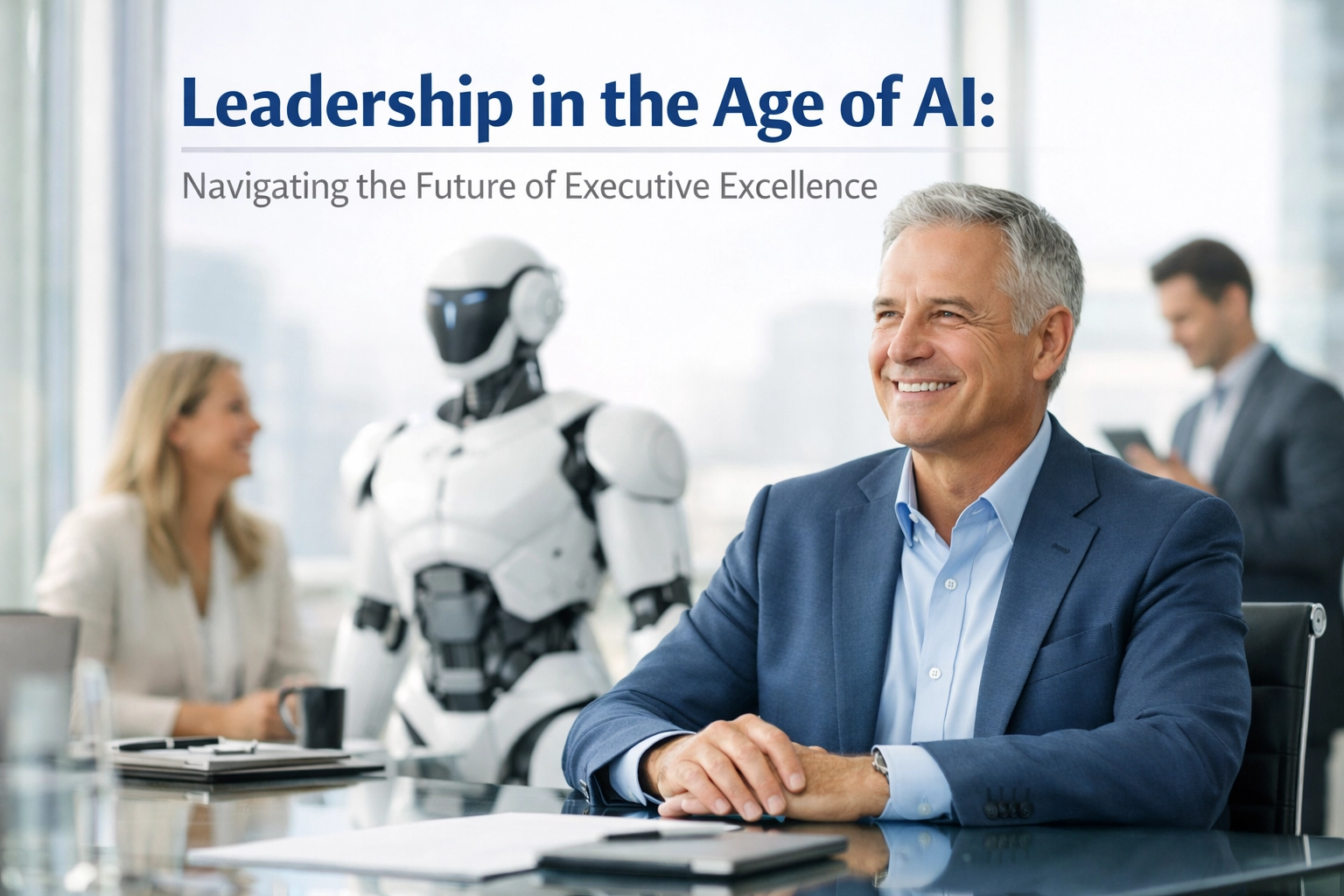
  • Leadership in the Age of AI: Navigating the Future of Executive Excellence

    Leadership in the Age of AI: Navigating the Future of Executive Excellence

    The business landscape of 2026 has reached a definitive crossroads. While the initial "hype cycle" of generative AI has cooled, it has been replaced by a much more demanding reality: the requirement for Strategic AI Integration. For today's Director or C-Suite executive, the challenge is no longer about deciding if to adopt artificial intelligence, but mastering how to lead an organization where human and machine intelligence operate in tandem.

    Current data reveals a startling "AI Leadership Gap." While approximately 92% of organizations have increased their AI investment budgets, only 1% of leaders feel their organizations have reached a "mature" state of deployment. This discrepancy highlights that the bottleneck is not the technology itself, but the lack of specialized AI leadership training capable of navigating this complex digital frontier.

    Beyond Technical Oversight: The Strategic Shift

    In previous years, AI was often relegated to the IT department. In 2026, digital transformation leadership requires moving beyond technical oversight toward holistic business orchestration. Leaders must transition from being "technology observers" to "strategic architects."

    The shift involves three primary pillars:

    • From ROI to VOI (Value on Investment): Moving beyond simple cost-cutting to measuring how AI enhances brand equity, customer intimacy, and long-term innovation.
    • From Siloed Pilots to Ecosystem Thinking: Integrating AI across all business functions rather than keeping it trapped in isolated use cases.
    • From Data Management to Algorithmic Governance: Shifting focus from "having data" to "governing how data makes decisions."

    Strategic AI leadership team collaborating in a modern boardroom on digital transformation.

    Five Core Competencies for Artificial Intelligence for Leaders

    To bridge the gap between ambition and execution, modern executives must cultivate a specific set of skills. At Exceed, our Leadership Capabilities focus on these five essential domains:

    1. Strategic AI Thinking

    Leaders must be able to identify which business problems are "AI-shaped" and which require traditional human intervention. This involves embedding AI into the core organizational strategy rather than treating it as a digital add-on.

    2. AI Governance and Ethical Stewardship

    With the rise of autonomous agents, the ethical implications of AI are no longer theoretical. Leaders must establish robust frameworks for transparency, bias mitigation, and regulatory compliance. You can explore more on this in our session on AI Strategy for the Boardroom.

    3. Change Management and Cultural Resilience

    AI implementation is 20% technology and 80% people. Leaders must manage the significant organizational stress that comes with shifting workflows. Frontline managers are often 3x more concerned about AI readiness than executives, necessitating a top-down approach to psychological safety.

    4. Augmented Decision-Making

    The goal of artificial intelligence for leaders is not to replace human judgment but to augment it. Executives must learn to use AI-driven insights to sharpen their intuition, identifying patterns in global markets that were previously invisible.

    5. Human-Centric Orchestration

    As routine cognitive tasks become automated, the "human" elements of leadership: empathy, creativity, and moral judgment: become the ultimate competitive differentiators.

    Navigating the Multi-Agent Frontier

    By 2028, it is projected that over 58% of business functions will rely on AI agents to manage at least one daily process autonomously. We are entering the era of "Multi-Agent Systems," where a leader's role is to manage a hybrid workforce of humans and digital entities.

    This requires a new operating model:

    • The Orchestrator Model: Leaders act as conductors, ensuring that the speed of AI agents does not outpace the organization's ability to remain ethical and brand-consistent.
    • Parallel Intelligence: Leveraging machine scale for data analysis while preserving human connection for stakeholder management.

    For deeper insights into navigating these shifts, our Future Capabilities programs provide the roadmap for this transition.

    Executive using AI-driven data visualizations on a tablet to guide team strategy.

    The Paradox: Tech-Driven but Human-Centric

    A common misconception in digital transformation leadership is that more technology equals less human interaction. In reality, the opposite is true. As AI handles the "heavy lifting" of data processing and administrative tasks, the premium on high-touch leadership increases.

    Leaders in 2026 must double down on:

    • Emotional Intelligence (EQ): Navigating the anxieties of a workforce undergoing rapid change.
    • Communication: Clearly articulating the vision for a tech-augmented future to prevent disengagement. Explore our Communication Capabilities for specialized executive coaching in this area.
    • Enduring Brand Values: Ensuring that AI interactions reflect the core DNA of the company. Learn more about Building Brands That Endure.

    Overcoming the Personal Cost of Transformation

    The pressure of steering an organization through the AI revolution is taking a toll on the C-Suite. Research indicates that 71% of leaders report heightened stress, with many considering leaving their roles due to the relentless pace of change.

    AI leadership training is not just about the organization; it is about personal sustainability. Executives need:

    • Structured Peer Learning: Engaging with other leaders who face similar challenges.
    • Executive Coaching: Moving away from generic training toward personalized mentorship that addresses specific leadership hurdles.
    • Expert Guidance: Leveraging the experience of global thought leaders like Anton Musgrave or John Sanei to gain a clearer perspective on the future.

    Personalized executive coaching session focusing on leadership development in the AI era.

    Action Plan: Steps for Executive Readiness

    To move from an "AI-aware" leader to an "AI-native" executive, consider the following checklist:

    • Assessment: Conduct an audit of your current digital literacy and identify gaps in your strategic understanding of AI tools.
    • Governance: Review your organization’s AI ethical guidelines. Do you have a framework for when an AI makes a mistake?
    • Courses: Enroll in specialized Executive Education that focuses on the intersection of technology and strategy.
    • Culture: Initiate a "Reverse Mentoring" program where tech-savvy junior employees help senior leaders understand emerging AI tools.
    • Pilot: Lead from the front by personally using AI tools for your daily productivity: shift your own workflow before asking your team to shift theirs.

    Confident leader walking through a modern office, representing the future of executive excellence.

    Conclusion: Leading with Purpose

    The age of AI does not demand that leaders become data scientists. It demands that they become better leaders. The technology provides the speed and the scale, but humans provide the direction and the purpose. By investing in AI leadership training and embracing a human-centric approach to digital transformation leadership, executives can ensure their organizations do not just survive the AI era but thrive within it.

    At Exceed, we specialize in preparing the world's most ambitious leaders for this very transition. Whether through our Great Minds series or our bespoke Strategy Capabilities, we provide the tools you need to lead with confidence in a tech-driven world.

    Are you ready to redefine your leadership for 2026 and beyond?

    Action Option
    Download the AI Roadmap [Submit Request]
    Book an Expert Consultation Contact Us
    Explore Leadership Capabilities View Programs

    Challenge your colleagues: Share this post with one peer and ask them: "What is the one AI decision we are delaying that we should be making today?"
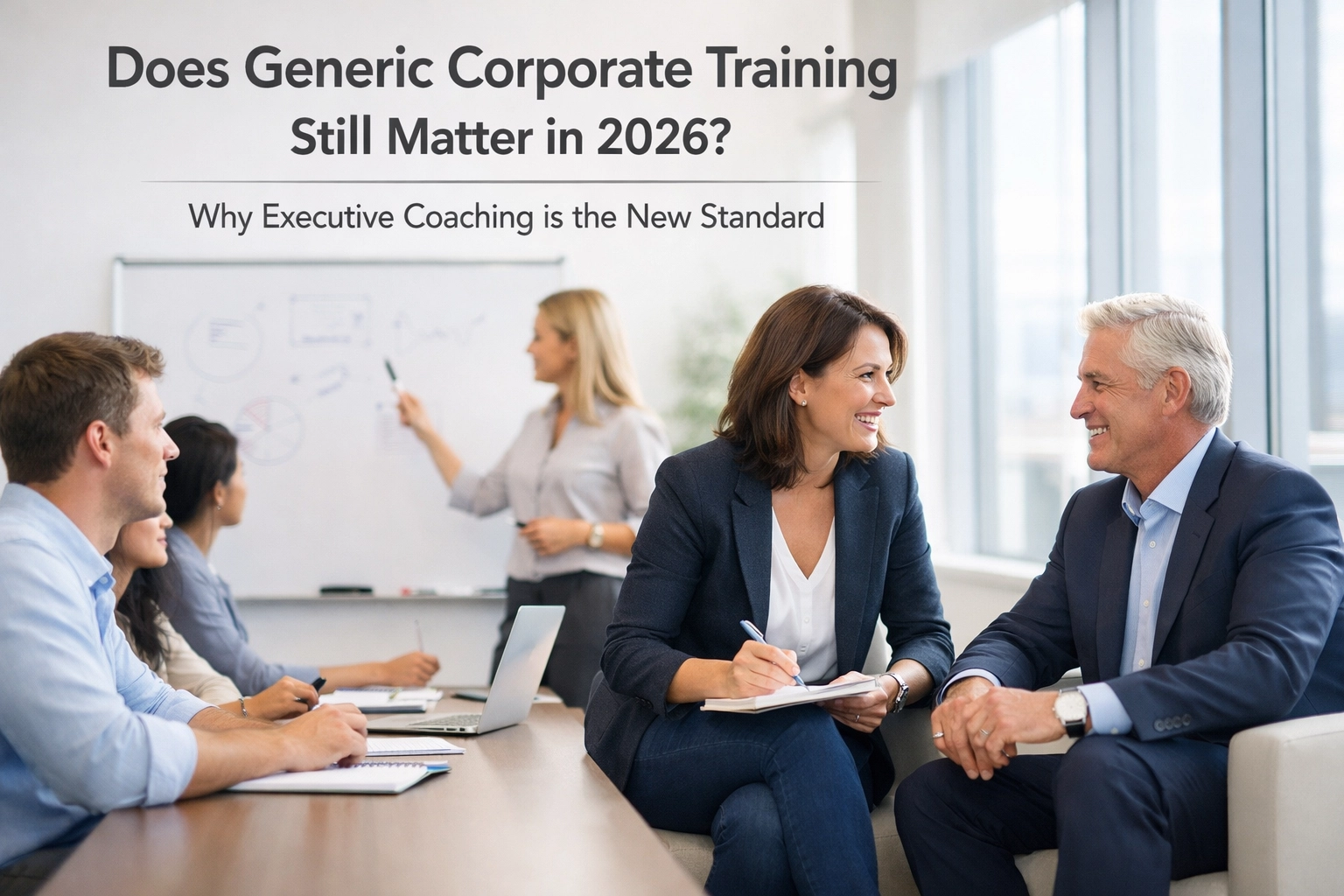

  • Does Generic Corporate Training Still Matter in 2026? Why Executive Coaching is the New Standard

    Does Generic Corporate Training Still Matter in 2026? Why Executive Coaching is the New Standard

    The corporate landscape of 2026 has no patience for the "Training Tax." For decades, organizations viewed professional development as a checkbox exercise: a series of disconnected workshops and generic seminars that provided little more than a temporary morale boost. Today, the needle has moved. In an era defined by rapid AI integration and volatile market shifts, the "one-size-fits-all" model of corporate training solutions is not just inefficient; it is a strategic liability.

    As we navigate this mid-decade milestone, a clear winner has emerged in the race for talent development: executive coaching and highly personalized learning experiences. For the C-Suite and emerging leaders, the transition from generic instruction to bespoke guidance is no longer a luxury: it is the new standard for survival.

    The 2026 Learning Crisis: Why Generic Training Fails

    In 2026, the volume of information is infinite, but the time to process it is shrinking. Traditional, static training programs often suffer from a fundamental flaw: the "forgetting curve." Research indicates that without immediate application and personalized reinforcement, up to 70% of learning fails to transfer to the actual job.

    The High Cost of "Average"
    • Skill Decay: Generic content becomes obsolete faster than the time it takes to roll out across a global workforce.
    • Low Engagement: Executives frequently "tune out" during sessions that do not address their specific, real-world business challenges.
    • Lack of Alignment: Standardized programs rarely account for the unique cultural nuances and strategic goals of an individual organization.

    At Exceed, we have observed that the most successful organizations have abandoned the pursuit of "completion rates" in favor of Capability Velocity: the speed at which a leader can acquire and apply a specific skill to drive a business outcome.

    Senior female executive using a tablet in a modern office to improve capability velocity and strategic thinking.

    The Shift to Strategic Capability Architecture

    Executive education has evolved from episodic events into a continuous, strategic architecture. Instead of asking "What training do we need?", forward-thinking Directors are now asking "What capabilities must our leadership possess to execute our 2027 strategy?"

    This shift has elevated executive coaching to the forefront. Unlike traditional workshops, coaching offers a surgical approach to development. It identifies the specific cognitive and behavioral blocks preventing a leader from reaching their peak performance.

    Personalized Learning Experiences vs. Static Libraries

    In 2026, "Personalization" means more than just having a user's name on a digital portal. It involves:

    • Skills Intelligence: Using performance data and peer feedback to predict capability gaps before they impact the bottom line.
    • Contextual Relevance: Tailoring the curriculum to the specific industry pressures, such as navigating AI strategy for the boardroom.
    • High-Touch Interaction: Moving away from pre-recorded videos toward live, interactive sessions with global experts.

    Why Executive Coaching is the New Standard for the C-Suite

    For a CEO or Director, the challenges are rarely technical; they are adaptive. You don’t need a manual on how to manage a budget; you need a partner to help you navigate a boardroom conflict or lead a cultural transformation after a merger.

    1. Faster Time-to-Value

    Generic training requires the participant to translate abstract concepts into their specific context. Executive coaching skips this step. By working on live business cases, the "learning" and the "working" happen simultaneously. This results in a significantly faster ROI.

    2. Cultural Alignment

    One of the primary benefits of bespoke executive education is the ability to align leadership development with corporate culture. At Exceed, we design programs that don't just teach leadership; they teach your leadership: the specific behaviors and mindsets required to thrive within your unique organizational ecosystem.

    3. Access to a Global Faculty Network

    In 2026, the value of a training partner is measured by the quality of their thinkers. Exceed leverages a network of world-class experts, including names like Andrew Bryant for self-leadership and Martin Roll for global strategy. This gives our clients access to the same caliber of thought leadership found at elite global universities, but with a practical, corporate focus.

    Global faculty network of diverse experts collaborating on high-level corporate training solutions.

    Measuring ROI: Moving Beyond Vanity Metrics

    In the past, HR departments measured the success of executive education by how many people attended and how much they enjoyed the catering. In 2026, these are dismissed as vanity metrics.

    To justify the investment in personalized coaching, organizations are now looking at:

    • Strategic Execution Speed: How much faster did the team hit their milestones after the coaching intervention?
    • Retention of Key Talent: Highly personalized development is a top-tier retention tool for high-potential leaders.
    • Behavioral Shifts: Using 360-degree assessments to measure tangible changes in leadership impact and communication efficacy.
    Performance Metric Comparison
    Feature Generic Training Personalized Coaching
    Content Standardized/Static Bespoke/Adaptive
    Delivery Mass Audience One-on-One / Small Groups
    ROI Measurement Completion Rates Business Impact/Capability Velocity
    Relevance Low (Generalised) High (Context-Specific)
    Long-term Impact Minimal (without follow-up) Sustained Behavioral Change

    The Exceed Approach: Bespoke Solutions for a Complex World

    At Exceed, we don't believe in off-the-shelf products. We understand that a family-owned business faces vastly different challenges than a tech multinational. Our process begins with a deep dive into your organizational DNA.

    Our Methodology:

    1. Diagnostic Assessment: We use advanced tools to identify the specific leadership gaps within your team.
    2. Expert Matching: We pair your executives with coaches and faculty members who have relevant industry experience, such as Ali Al Jaberi for public sector excellence or Anton Musgrave for future-proofing.
    3. Iterative Learning: Our programs are not one-off events. They are ongoing journeys that adapt as your business goals evolve.
    4. University Ties: We bridge the gap between academic rigor and corporate agility through our strategic partnerships, ensuring your leaders receive the latest evidence-based insights.

    Personalized executive coaching session between a mentor and director overlooking a modern city skyline.

    The Future of Leadership Development

    As we look toward the remainder of 2026 and beyond, the distinction between "working" and "learning" will continue to dissolve. The most successful leaders will be those who view their own development as a continuous, personalized process rather than a destination.

    Generic training isn't necessarily dead, but it has been demoted to a foundational tool for basic compliance and technical onboarding. For everything else: for strategy, for culture, for innovation: executive coaching is the new standard.

    Ready to Transform Your Leadership?

    Does your current development strategy reflect the demands of 2026? It is time to move past the limitations of generic programs and embrace the power of personalized growth.

    Select your primary focus area:

    • Digital Transformation & AI Strategy
    • Leadership & Cultural Change
    • Strategic Communication
    • Family Business Governance

    Challenge your current model:
    Create your own bespoke learning path today. Contact our team to discuss how Exceed’s capabilities can be tailored to your organization’s specific needs.

    SUBMIT YOUR INQUIRY

    A visionary executive looking toward a city horizon, symbolizing the high ROI of personalized executive education.

    Summary of Key Concepts:
    • Executive Education must be personalized to ensure a high ROI.
    • Corporate training solutions should focus on "Capability Velocity" rather than just completion.
    • Executive coaching provides the contextual relevance and behavioral reinforcement that generic programs lack.
    • Exceed provides access to a global faculty and university-level insights tailored for immediate corporate application.

    By investing in personalized, culture-aligned coaching, you aren't just training your leaders; you are future-proofing your entire organization. The "Standard" has changed. Have you?


    To learn more about our philosophy and our team of experts, visit our About Us page.

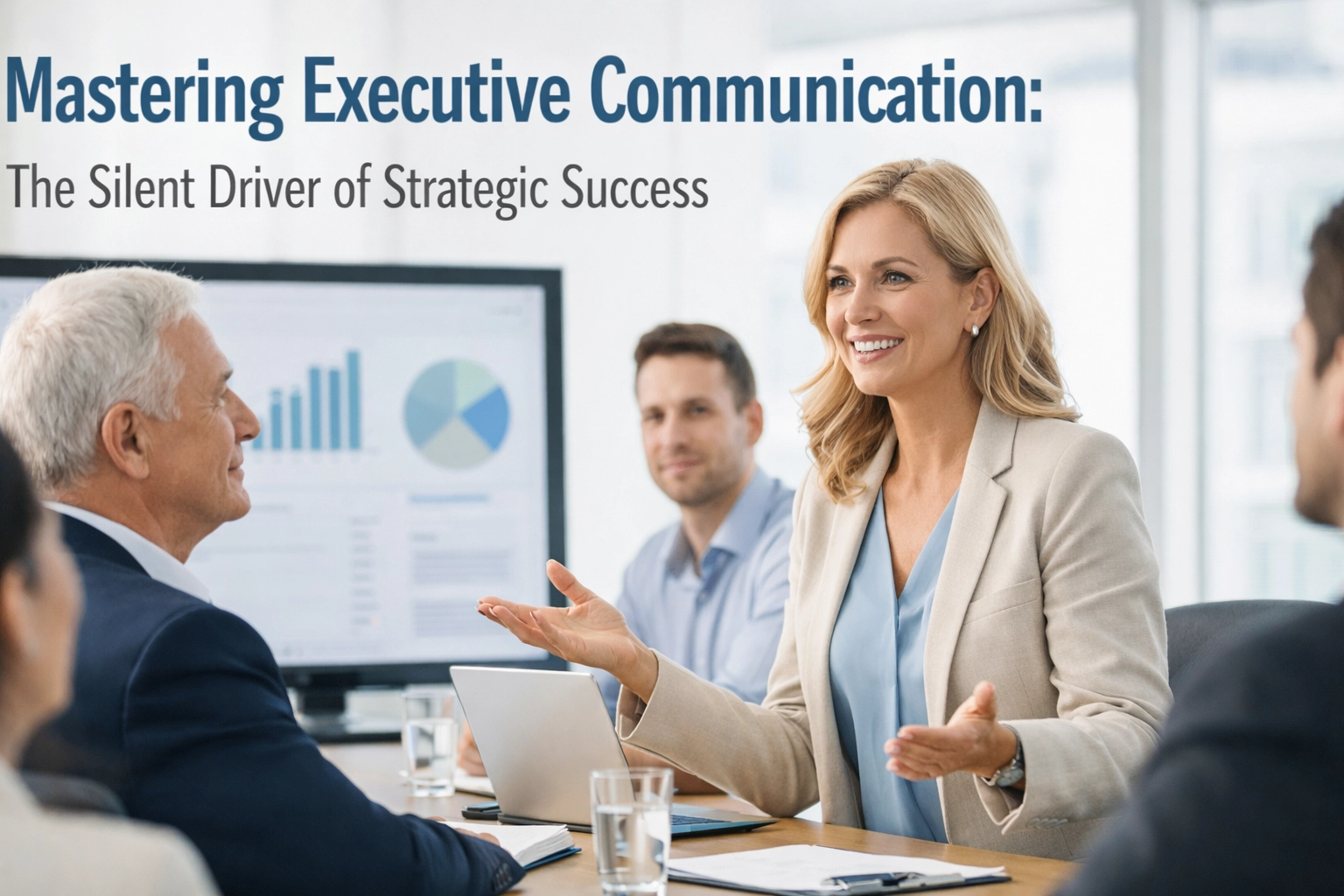
  • Mastering Executive Communication: The Silent Driver of Strategic Success

    Mastering Executive Communication: The Silent Driver of Strategic Success

    In the modern corporate landscape, a well-defined strategy is only as powerful as the leader’s ability to communicate it. While many organizations invest millions in strategic planning, research indicates a staggering disconnect: nearly 70% of employees remain unclear about their organization’s strategic objectives.

    The gap between intent and execution is rarely a failure of intelligence; it is almost always a failure of communication. Organizations that prioritize highly effective communication strategies see a 47% higher total return to shareholders over five years compared to those that do not. At Exceed, we recognize that executive communication is not merely a soft skill, it is the critical backbone of strategy execution and the silent driver of long-term strategic success.

    The High Cost of the Communication Gap

    When leadership fails to articulate a clear path forward, the entire organization suffers from "strategic drift." This misalignment creates a vacuum filled by speculation, resistance to change, and fragmented efforts.

    • Recall Challenges: Only 28% of executives can recall three of their company’s top strategic priorities.
    • Cultural Erosion: Without transparent messaging, trust in leadership declines, leading to lower employee engagement.
    • Wasted Resources: Teams may work diligently on initiatives that no longer align with the evolving organizational strategy training provided at the top level.

    To bridge this gap, leaders must move beyond broadcasting information and toward orchestrating understanding. This transition requires a dedicated focus on leadership development programs that emphasize clarity, authenticity, and empathy.

    Executive engaging in a one-on-one session as part of a leadership development program.

    Why Generic Solutions Fail: The Need for Customized Executive Training

    The nuances of high-level leadership cannot be addressed through "off-the-shelf" training modules. Every organization possesses a unique culture, a specific set of challenges, and a distinct strategic roadmap.

    Customized executive training is essential because:

    1. Contextual Relevance: It addresses the specific market pressures and internal dynamics of your industry.
    2. Individual Coaching: It targets the unique communication blind spots of individual leaders, from public speaking to boardroom negotiations.
    3. Strategic Alignment: It ensures that the language used by the C-suite mirrors the goals set in the boardroom.

    At Exceed, our capabilities in communication are built on the premise that one size fits none. We pair leaders with world-class experts like Jack Milner to refine the art of storytelling and persuasive messaging, ensuring that every word spoken by an executive carries strategic weight.

    The Four Pillars of Executive Communication

    Mastery in executive communication requires a balance of several core characteristics. When these four pillars are integrated into a leader’s repertoire, they transform from a manager of tasks into a driver of culture.

    1. Radical Clarity

    Executives must distill complex data into understandable narratives. This involves stripping away unnecessary jargon and focusing on the "Why" behind the "What." Effective organizational strategy training teaches leaders to use mission mantras and metaphors that stick in the minds of their teams.

    2. Unwavering Authenticity

    Trust is the currency of leadership. Even when delivering difficult news, such as restructuring or pivots, authentic leaders share truthful messages. This transparency builds the psychological safety necessary for innovation and risk-taking.

    3. Strategic Adaptability

    A message that resonates with the Board of Directors may fall flat in a town hall meeting. Leaders must be able to tailor their delivery to the specific needs and emotional states of their audience without losing the core intent of the message.

    4. Cognitive Empathy

    The most effective communicators validate the emotions of their workforce. By acknowledging the human element of change, leaders can mitigate resistance and foster a sense of shared purpose.

    Female leader using authentic executive communication to align her team in a modern office.

    Cascading Strategy: From Boardroom to Breakroom

    The ultimate goal of executive education is to create a "cascading effect." Leadership communication should not stop at the direct reports; it must flow through every layer of the organization.

    The Cascading Framework:
    • Define Objectives: Clearly align communication goals with the broader organizational strategy.
    • Identify Stakeholders: Map out who needs to know what, and when.
    • Consistency is Key: Use multiple channels (video, email, town halls, one-on-ones) to reinforce the same core message repeatedly.
    • Two-Way Dialogue: Create feedback loops where employees can ask questions and provide insights. This fosters a culture of collaboration rather than top-down dictation.

    Exceed’s Approach to Bespoke Leadership Development Programs

    At Exceed, we believe that leadership development programs should be as dynamic as the market itself. Our approach to executive education involves a deep dive into your organization’s DNA.

    Our Methodology Includes:
    • Executive Presence Assessment: Evaluating current communication styles and identifying areas for growth.
    • Expert-Led Workshops: Engaging with thought leaders such as Ali Al Jaberi to master public narrative and media presence.
    • Strategic Simulation: Practicing high-stakes communication scenarios, from crisis management to merger announcements.
    • Technology Integration: Understanding how to leverage emerging technologies to enhance communication reach and impact.

    Executives participating in customized organizational strategy training using modern technology.

    Building a Culture of Transparency and Trust

    Strategic success is not a one-time event; it is a continuous process of alignment. Executive communication serves as the heartbeat of this process. When leaders communicate effectively, they do more than just share information, they build a culture where every employee feels empowered to contribute to the company's success.

    Challenge Your Current Communication Strategy:

    • Does your team know the top three strategic priorities for 2026?
    • Is your messaging consistent across all internal and external platforms?
    • Are your leaders equipped with the skills to handle difficult conversations with empathy?

    If the answer to any of these is "No," it may be time to rethink your approach to customized executive training.

    The Role of Global Expertise

    In an interconnected world, executive communication also requires a global perspective. Understanding cross-cultural nuances is vital for leaders of multinational corporations. Our experts, such as Michael Gates and Anton Musgrave, provide the necessary insights to navigate diverse communication landscapes, ensuring that your strategic message is never "lost in translation."

    Global executives collaborating to ensure strategic success across international markets.

    Summary of Strategic Communication Benefits

    Feature Strategic Impact
    Clarity of Vision Reduces employee turnover and increases focus.
    Authentic Leadership Enhances brand reputation and internal trust.
    Cascaded Strategy Accelerates the speed of execution across departments.
    Bespoke Training Addresses specific organizational bottlenecks effectively.

    Ready to Elevate Your Leadership?

    Effective communication is the difference between a strategy that lives on a slide deck and one that transforms an organization. At Exceed, we specialize in bridging that gap through world-class leadership development programs and customized executive training.

    Take the next step in your leadership journey:

    SUBMIT a request for a consultation to learn how we can tailor a program for your executive team.

    CONTACT US

    Exceed: Empowering leaders to communicate with purpose, lead with clarity, and execute with precision.